

A Los Angeles-based artist and designer has demonstrated how strategic furniture choices and creative customization can completely reimagine a century-old rental apartment. Over three years, she turned a 750-square-foot space in a 1927 French chateau-style building into a highly personalized home that balances comfort with artistic expression.
The project reveals valuable lessons for renters and homeowners alike about making rental spaces feel authentically personal without permanent damage. Instead of focusing on major renovations, she prioritized furniture selection, color, and layered styling as her primary design tools.
Starting With Renter-Friendly Changes
The designer began by treating her apartment as a blank canvas, concentrating on modifications that would have real impact while remaining temporary. She explains that her approach focused on changes that could work within the constraints of a rental agreement. Paint became her most powerful tool, with bold color blocking and accent walls defining different zones throughout the apartment and completely shifting the overall mood of each room.
Beyond paint, she added architectural elements like ceiling molding sourced from major retailers, which brought more visual detail without requiring permanent installation. This strategy shows how thoughtful furniture placement and design elements can transform how a space feels, even within rental limitations.
Strategic Furniture Sourcing
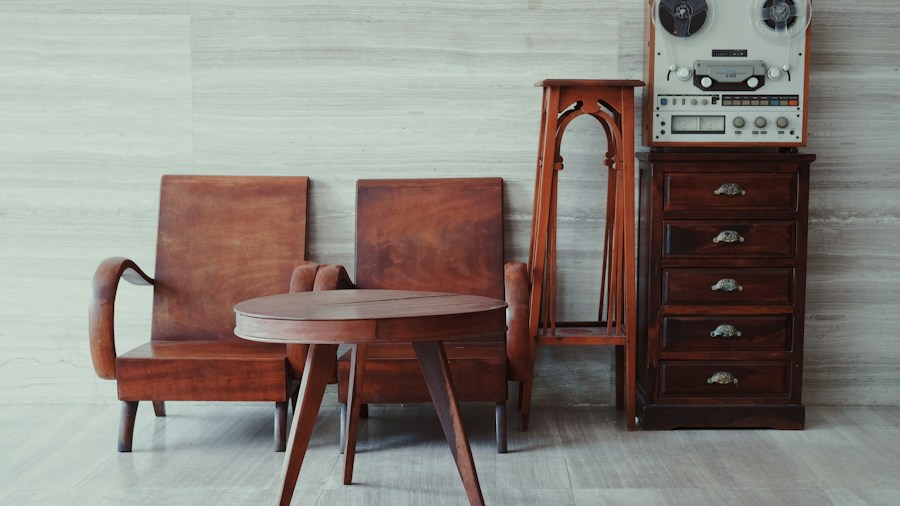
Her furniture strategy combined retail purchases, secondhand finds, and handmade pieces into one cohesive aesthetic. Facebook Marketplace emerged as her go-to resource for unique vintage and used items, where she discovered everything from dining tables and chairs to bedroom essentials and decorative accessories. She also purchased select pieces from established retailers like West Elm, Wayfair, and CB2, strategically mixing price points and sources.
The result is an apartment where high-end retail pieces sit comfortably alongside Facebook Marketplace discoveries and custom-built furniture. A credenza she designed and hand-painted herself serves as a focal point in her studio corner, demonstrating how custom pieces don’t require professional upholsterers or contractors. Her approach proves that mixing vintage, custom, and retail furniture can create visual interest and depth without feeling chaotic or disconnected.
Room-by-Room Transformation
In her main living area, she combined a modern sofa from a design-focused retailer with vintage chairs, a marble stool, and cushions sourced from secondhand markets. The layered approach created a comfortable yet visually rich environment. Her art collection and her father’s vinyl records displayed on the wall added personal meaning to the space.
Her bedroom reflects similar mixing strategies, incorporating inherited pieces from her late mother alongside original artwork she created, store-bought textiles, and found furniture. Bedside tables came from West Elm, while lamps from Etsy and bedding from Lulu and Georgia rounded out the room. The result feels both grounded and expressive, blending multiple eras and sources seamlessly.
The dining area showcases budget-conscious creativity. She found tulip-style table and chairs on Facebook Marketplace, then created a gallery-style wall using vintage magazine issues she purchased in bulk at a garage sale for ten dollars. This kind of resourcefulness demonstrates how furniture and decor don’t need to be expensive to feel curated and intentional.
Color as a Design Strategy

Throughout the apartment, bold colors distinguish different zones and create a sense of flow. Rather than relying on neutral walls and letting furniture do all the visual work, she used paint to establish mood and personality in each room. This approach shows that strategic furniture selection combined with intentional color choices creates more dynamic interiors than either element alone.
The color blocking creates visual interest while helping smaller spaces feel more organized. Each room maintains its own personality while remaining cohesive with the overall aesthetic.
Key Takeaways for Shoppers
This transformation offers several practical lessons for anyone furnishing a rental or permanent home. First, prioritize quality in key pieces like sofas and beds, but don’t hesitate to source accent furniture secondhand. Second, add personality through paint, textiles, and art rather than waiting for expensive renovations. Third, mix price points and sources confidently, trusting that intentionality matters more than matching everything to one retailer.
The designer’s philosophy emphasizes that a lived-in, personal space doesn’t require high budgets or permanent construction. Instead, thoughtful furniture choices, creative problem-solving, and artistic vision can completely reimagine any rental or owned home into a space that reflects who you are and how you actually live.











Write Your Review
No reviews yet. Be the first to share your experience!