

Logitech has unveiled an ambitious mixed reality training platform called MX Surgical, developed in collaboration with Swedish designer Niklas Andreasen from the Umeå Institute of Design. The concept addresses a long-standing gap in medical education: the shortage of hands-on surgical practice before residents work on actual patients. Unlike traditional flight simulators that let pilots crash virtual aircraft risk-free, surgical training has lagged behind, forcing many residents to perform procedures with minimal rehearsal. This new system could fundamentally change how the next generation of surgeons learns their craft.
The MX Surgical kit pairs specially designed controllers with a mixed reality headset to create an immersive training environment that’s portable, affordable, and far more accessible than existing options. Currently a concept without pricing or official launch plans, the kit has already earned significant design recognition, including Emerging Product Designer of the Year at the 2026 European Product Design Awards and nominations for multiple prestigious design honors. For medical professionals and hospital administrators, understanding what this technology offers reveals how training could become more democratic and data-driven in the coming years.
Three Controllers Replace an Entire Surgical Instrument Tray
A traditional surgical tray holds dozens of specialized instruments, each with its own unique feel and mechanics. Rather than creating individual replicas of every tool, Andreasen designed a smarter solution by identifying three core instrument families based on how they function mechanically. Ring-handled instruments like scissors, clamps, and needle holders operate through one pivoting action. Forceps work by pinching. Scalpels and probes function with a pen-grip style. One customizable controller handles each category, with adjustable spring tension and range of motion that shifts in real time.
Logitech’s four-decade history designing mice, keyboards, and controllers around human ergonomics shines through in the execution. The MX Surgical controllers carry the warm matte grays and soft curves of Logitech’s MX product family, creating a familiar feel for anyone already using Logitech’s design-focused peripherals. The haptic feedback mechanism sits precisely at the pivot point where resistance matters most, allowing trainees to feel the actual push-back and resistance they’d experience with real surgical instruments. Logitech’s long track record of ergonomic precision in consumer products translates directly to the demanding needs of surgical training.
Layered Training Pads Meet Virtual Anatomy
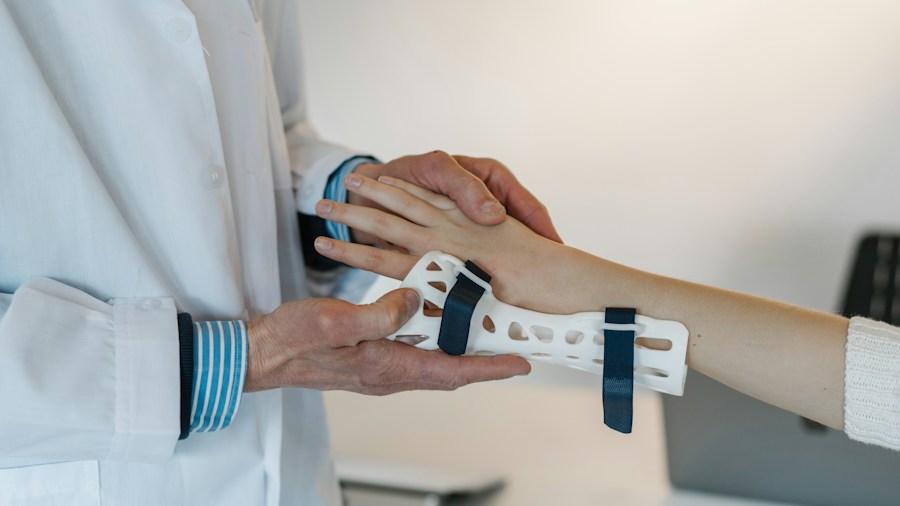
The kit uses a hybrid approach that splits the sensory load between physical and digital elements. Swappable layered training pads represent human tissue at different depths, fitting into a die-cut tray inside the carry case. As trainees work through a procedure, the mixed reality overlay reveals deeper anatomical layers progressively, matching what they’re actually doing with their hands. This means your fingers feel real resistance and texture while your eyes see accurate anatomy and surgical context simultaneously.
Hospitals and training programs can build custom material libraries, swapping pads and components to focus on specific surgical specialties or individual case studies. A simpler screen-based version exists for trainees without access to a headset, making the system flexible across different institutional settings. This approach bridges the gap between cheap suturing pads that feel realistic but teach nothing about procedure flow, and full VR simulations that show context but feel disconnected from actual touch. The entire system packs into a slim carry case designed for portability, allowing residents to practice at home or take it between rotations.
Data Tracking That Captures Knowledge Traditionally Passed by Osmosis
Every training session generates detailed metrics through a companion platform that tracks motor patterns, motion efficiency, accuracy, force control, and response timing. These numbers quantify what experienced surgeons notice intuitively: hesitations, grip pressure problems, or inefficient movements. The system automatically adjusts difficulty as performance improves and maintains a digital anatomy reference library. Research shows that proper tools and feedback systems reduce stress and improve learning outcomes across professional environments.
Mentors can review training sessions remotely, and residents can train alone or collaboratively before sitting down with attending physicians to discuss recorded results. Andreasen built this feature by consulting extensively with surgeons and educators in Sweden and Germany, capturing the tacit knowledge that surgical residency has traditionally passed from mentor to trainee without ever documenting. This approach modernizes the 135-year-old Halsted method from Johns Hopkins, which operates on the principle: see one, do one, teach one. The MX Surgical adds a critical fourth step: practice one first, using technology that belongs on a desk rather than bolted to a hospital floor.
What This Means for Medical Training and Hospitals
Unlike expensive haptic surgical platforms that require desk-mounted arms and dedicated space, the MX Surgical kit offers portability and affordability as core advantages. Residents can make their first mistakes on training pads instead of living patients, building confidence and muscle memory before high-stakes situations. The data platform creates accountability and measurable improvement, transforming surgical education from subjective observation into quantified skill progression. For hospital administrators, this could mean faster competency development, reduced supervision requirements during early procedures, and better outcomes through deliberate practice.
The concept currently lacks official pricing or confirmed launch timeline, but the design awards and industry interest suggest serious development is underway. When this technology eventually reaches medical schools and teaching hospitals, it could reshape how the next generation learns to operate, making expert-level training accessible far beyond the institutions that can afford six-figure simulation rigs.











Write Your Review
No reviews yet. Be the first to share your experience!