

A workspace that looks polished in a photograph often fails when you actually try to work in it for eight hours. Your monitor is perfectly positioned, your cables are tucked away, and your chair matches your decor, yet by midday you’re shifting uncomfortably, trying to find a position that doesn’t leave your back aching or your arms unsupported. This disconnect between Instagram-ready office aesthetics and real-world comfort is a problem that EFFYDESK’s new Aery Ergonomic Chair directly addresses.
The Aery takes a practical approach to one of home office workers’ biggest challenges: finding a chair that works for your body and your space. Whether your office is crammed into a bedroom corner or shares real estate with your living room, selecting seating requires compromise. You need something genuinely comfortable for hours of sitting, yet it also has to look like it belongs in your home when you’re not working. The Aery bridges this gap with thoughtful design choices and extensive personalization options that let you adjust the chair to fit your specific needs rather than forcing yourself into a fixed mold.
Design That Balances Function and Appearance
The chair’s mesh backing plays a crucial role in its visual appeal. Unlike traditional office chairs with tall, fully upholstered backs that can dominate a small room, the open mesh design keeps the chair’s supporting structure visible. This creates breathing room around the silhouette, preventing it from looking like an imposing block next to your desk. The cushioned seat provides a visual and tactile counterpoint, offering padding where you need it most while maintaining a cleaner aesthetic. It’s a piece of furniture that looks unmistakably professional without pretending to be something it isn’t.
What makes the Aery particularly relevant for today’s remote workers is its understanding that home office chairs face different demands than those in corporate settings. Workplace design continues to evolve as companies recognize how furniture impacts not just productivity but overall well-being, and this principle applies equally to home office setups where your chair is part of your living space.
Customization Options That Matter
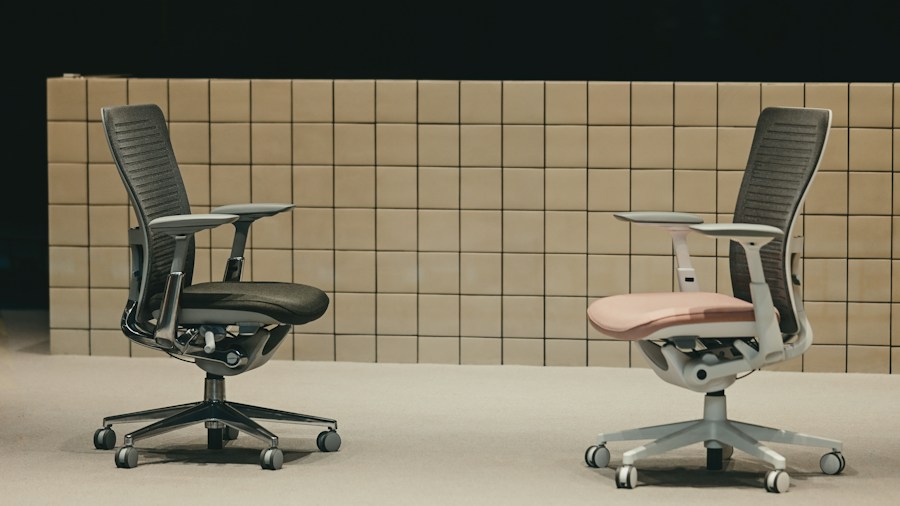
The Aery’s adjustability features focus on solving real comfort problems rather than simply accumulating options for the sake of it. The most practical adjustment may be its least obvious: a forward and backward sliding seat. Rather than changing the chair’s appearance, this function alters how the cushion supports your thighs and legs. If you’ve ever owned a beautiful chair that forced you to perch awkwardly on its edge because sitting fully back felt wrong, you’ll appreciate how this single adjustment can transform your daily experience.
The armrests are equally thoughtful, offering height adjustment, lateral sliding, and rotation. Most people don’t think about armrest positioning until they’re stuck in a chair where the supports don’t align with their natural arm position, causing shoulder tension and poor posture throughout the day. The Aery lets you place these supports where they actually work for your body, not where a designer decided they should go.
The reclinable back and separate headrest accommodate different working styles, letting you shift into a more relaxed posture when reading documents or taking breaks between focused tasks. The headrest feels secondary to getting the seat and armrest positioning correct, since those are the contact points you’ll engage with during actual work.
What This Means for Home Office Shoppers
The launch of the Aery signals a broader trend in office furniture design: recognition that home offices operate under different constraints than corporate environments. Recent releases in the office chair market have emphasized that personal style and workspace personality matter as much as ergonomic features, and the Aery embodies this philosophy.
For shoppers evaluating office chairs, the Aery offers several practical lessons. First, don’t assume that a chair looking good in your space means it will feel good during an eight-hour workday. Second, prioritize adjustability in the areas where your body makes contact: the seat, armrests, and backrest. Third, consider how a chair’s visual footprint works in a room where you spend personal time outside of work hours. The office chair market continues to offer options at various price points, making it possible to find quality ergonomic solutions without overspending.
One limitation worth noting: reviews and product images can only tell you so much. Testing a chair in person, checking whether adjustments hold their position during the workday, and seeing how it fits beneath your specific desk setup remain essential before purchasing. The Aery’s design philosophy emphasizes personalization, but only you can determine if it personalizes the right way for your body and space.











Write Your Review
No reviews yet. Be the first to share your experience!