

A Mill Valley home in Northern California demonstrates a refreshing approach to interior design: instead of starting from scratch, the homeowners and their designer worked backward from treasured pieces they already owned. The full-home renovation centered on honoring family heirlooms and meaningful collections, creating a cohesive space that blends British heritage with California’s relaxed sensibility.
For shoppers planning their own renovations or room updates, this project offers valuable lessons about furniture selection, mixing styles, and the real cost savings that come from designing around what you love rather than discarding it.
Building Around Family Pieces
The heart of the home’s entry is a round heirloom table inherited by the owner. Rather than relegating it to storage or a secondary space, designer Jennifer Tidwell made it a focal point, positioning it at the center of the foyer where it greets visitors. This decision shapes how professionals recommend approaching major renovations: before committing to new furnishings, inventory what you already own that has meaning or quality craftsmanship.
A botanical photograph nearby introduces the owner’s contemporary art collection, curated in collaboration with a British art consultant and featuring works exclusively by female artists. This layering of personal history with current taste demonstrates how thoughtfully chosen art and inherited furniture can establish a home’s entire visual direction.
Mixing Eras Without Clashing
One challenge many homeowners face is combining vintage pieces with modern furniture without the result feeling disjointed. In this home, a vintage chandelier and a contemporary sconce share similar materials and finishes, showing how different eras can coexist when they speak the same visual language. Dark wood furniture makes stylish comeback in 2024, and this project proves why: warm wood tones tie together distinctly different furniture silhouettes and time periods.
The designer also used pattern and texture to create cohesion. Plaid cushions, tweed-like wallpaper, and woven textiles nod to British tailoring while feeling at home in a California context. Broader geometries and sweeping curves balance finer details, preventing the pattern mixing from overwhelming the light-filled spaces.
Practical Lessons for Furniture Selection
The mudroom demonstrates how furniture can be reimagined for function. A built-in bench topped with a plaid cushion offers a place to remove boots while creating a tailored appearance. For shoppers with entryways that lack built-in seating, powder coated aluminum furniture is replacing plastic as a durable material for transitional spaces, offering both style and longevity.
In the living room, two generous sofas face each other across a low coffee table, a furniture arrangement that encourages conversation naturally. Hallabala chairs reupholstered in indigo fabric introduce sweeping wood curves, while cushioned built-ins provide flexible seating. This layered approach to seating means the room works equally well for family gatherings and entertaining guests.
Color and Pattern as Design Anchors
Rather than starting with a predetermined color palette, the designer chose a single wallpaper first: a patterned paper in the study. Its colors and mood informed every room that followed, creating visual continuity without repetition. The study’s concentrated palette supplied accent colors used throughout the home, helping spaces with very different patterns feel intentionally connected rather than random.
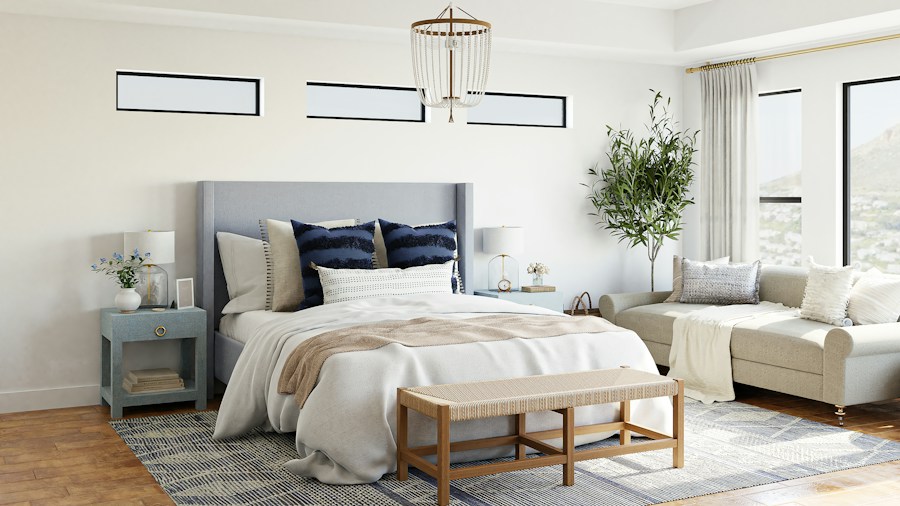
The primary bedroom strips back to essentials, using a restrained gray across walls, trim, and ceiling to create an enveloping feel. Texture then becomes the priority: a patterned throw, loosely woven pillows, and a crisp headboard pattern add interest without visual noise. This approach teaches shoppers that you don’t need a riot of color to create a sophisticated space.
Storage and Furniture as Storytelling
Throughout the home, custom built-ins serve both practical and aesthetic functions. In the second boy’s bedroom, sloping ceilings invite tailored storage that follows the roofline. A slim ledge above the headboard provides display space without bulk. For teenagers’ rooms especially, selecting furniture with lasting appeal rather than trend-driven pieces means a room can grow with the child and serve multiple purposes over time.
The designer notes that the home’s strength lies in its willingness to acknowledge the people who live there. A favorite chair might need new upholstery, an inherited table might find itself in an unexpected room, and both can look entirely at home when surrounded by thoughtful choices about color, pattern, and proportion. Container cabin furniture design rethinks space planning by maximizing every square foot, and similar thinking applies to any home: make furniture decisions that respect your existing treasures.
For homeowners planning renovations, the takeaway is clear: take time to assess what you already own before shopping for replacements. Quality furniture, family pieces, and beloved objects are the strongest foundation for any design scheme. Working with those pieces rather than against them results in a home that feels personal, layered with history, and ultimately more beautiful than any generic new start ever could be.












Write Your Review
No reviews yet. Be the first to share your experience!