

A cutting-edge art installation from Amsterdam-based studio DRIFT is redefining how designers visualize invisible forces in interior spaces. The project, called Aeolus, uses hundreds of suspended glass rods and dynamic lighting to capture the essence of wind movement without requiring any physical motion. This breakthrough approach offers valuable lessons for anyone interested in how modern home decor can blend art, technology, and spatial design.
How the Installation Works
Aeolus transforms air movement into a tangible visual experience by freezing a single moment of simulated wind flow in glass form. The installation begins with a digital analysis of the room’s architecture. Designers then create a virtual environment where air patterns can be studied and modeled. Rather than displaying a live reading of actual air currents, they select one specific instant from that simulation and translate it into physical form using borosilicate glass rods suspended by stainless steel nodes.
The real innovation lies in the lighting system. Custom LEDs embedded within the glass rods respond to visitor movement throughout the space. As people walk through the gallery, the lights shift in rhythm and intensity, creating waves of illumination that travel across the fixed structure. This approach generates the optical illusion of motion without the sculpture physically swaying, much like how a billowing curtain catches the eye more readily than the wind itself.
Why This Matters for Home Design Trends
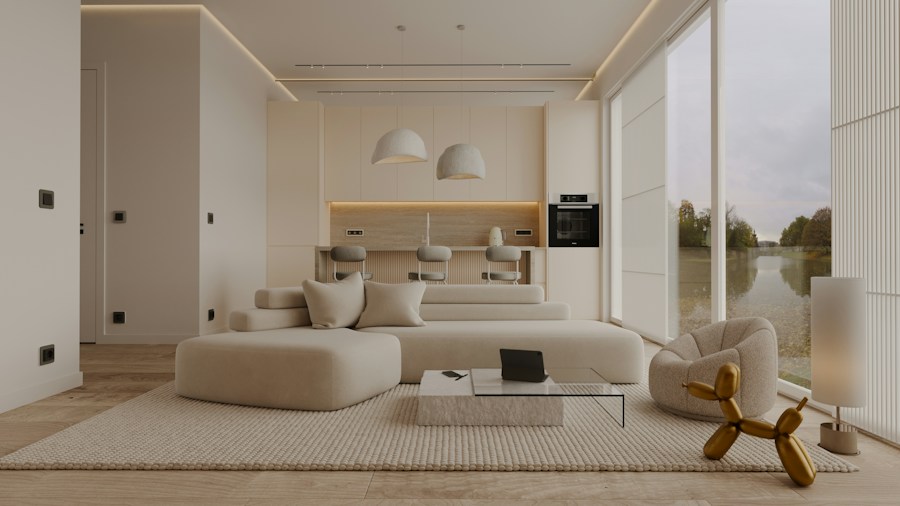
For homeowners and decor enthusiasts, Aeolus demonstrates an emerging principle in contemporary interior design: technology can enhance perception without overwhelming a space. The installation proves that creating visual interest doesn’t require constant mechanical movement or heavy visual weight. This concept directly influences how designers approach curtains and window treatments as focal points in modern interiors.
The project also highlights how room architecture shapes design outcomes. Since Aeolus is generated from each venue’s specific spatial geometry, no two installations are identical. The building itself becomes part of the creative process. This collaborative relationship between architecture and art suggests that future home decor will increasingly integrate space-responsive elements rather than treating rooms as blank containers for standalone pieces.
The Materials Behind the Aesthetic
The technical specifications reveal an interesting contrast. While Aeolus appears weightless and ethereal, its construction requires precision engineering. The system relies on borosilicate glass rods, stainless steel suspension nodes, custom LED fixtures, and microcoax cables. Understanding this gap between appearance and infrastructure matters for consumers interested in contemporary home pieces. Many modern decor elements that look minimalist or organic actually depend on sophisticated underlying systems.
Visitor Interaction and User Experience
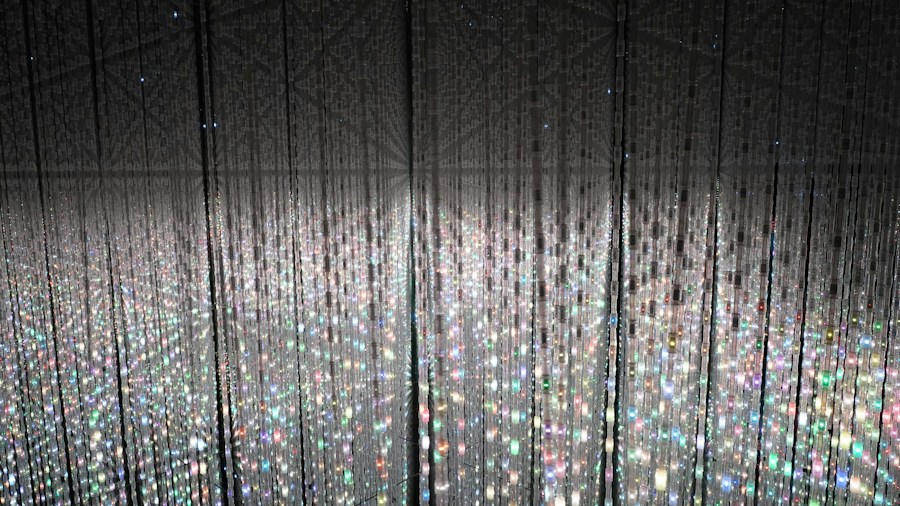
Rather than treating visitors as passive observers, Aeolus gives them an active role in shaping the experience. Your movement through the space directly alters the lighting patterns, creating a direct feedback loop between human presence and artistic response. This interactive quality feels intuitive and appropriate for an installation about air and movement. Unlike complex technology that requires operator knowledge, the interaction here is beautifully simple: walk through the space, and the lights respond.
This approach to engagement offers insights for home decor design. The most successful contemporary pieces create a meaningful relationship with inhabitants without demanding technical expertise. Whether through responsive surfaces, modular designs, or adaptive lighting, the trend favors objects that acknowledge and adapt to human presence. It’s an idea that applies equally to statement curtain installations that create visual flow or layered lighting schemes.
What This Means for Future Decor Purchases
Aeolus presented at London’s Ladbroke Hall from October 13-25, 2026, represents a broader shift in how designers approach interior spaces. The installation suggests that future home decor will increasingly prioritize the relationship between people and objects over static beauty alone. Shoppers should expect more pieces that respond to movement, adapt to room architecture, or create optical effects through light rather than material alone.
The use of glass as a structural material also reinforces a design trend toward transparency and visual lightness. Like carefully chosen statement curtains that define bathroom spaces, glass installations allow light to pass through while creating distinct visual statements. This quality makes them adaptable to various interior styles without requiring complete room redesigns.
The fundamental achievement of Aeolus is modest but powerful: making an invisible force visible through careful material choices and lighting design. For home decor shoppers, this teaches an important lesson. The most compelling pieces often succeed not through complexity or novelty, but through thoughtful engagement with space, light, and human movement. As you evaluate new pieces for your home, consider whether they create a meaningful dialogue with your room and your daily life within it, rather than simply occupying space.









Write Your Review
No reviews yet. Be the first to share your experience!