

The U.S. Navy recently achieved a significant milestone in autonomous aircraft technology by successfully landing unmanned drones on moving ships without relying on GPS signals. This breakthrough uses onboard cameras, motion sensors, and advanced algorithms developed by the Naval Air Warfare Center Aircraft Division (NAWCAD) to guide aircraft toward vessels even when satellite navigation is unavailable or jammed.
The demonstration marks a shift in how autonomous recovery systems work. Instead of requiring expensive, specialized tracking equipment mounted on naval vessels, the new software analyzes visual data from cameras already installed on aircraft and uses motion sensor readings to calculate ship movement in real time. The system then adjusts the drone’s approach to synchronize with the ship’s pitch and motion during landing.
What This Means for Home Security Shoppers
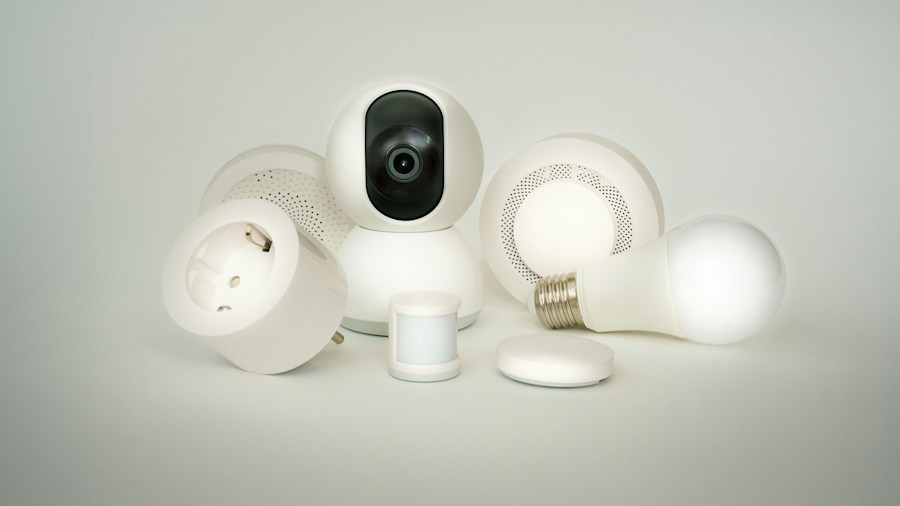
While this Navy development focuses on maritime operations, the underlying technology has direct implications for consumer home security. The core innovation, motion detection combined with visual analysis, represents the future direction of residential security systems. These same principles are already appearing in advanced home security products that combine camera feeds with motion sensor data for smarter threat detection.
Many modern home security systems use motion sensors as a first line of defense, but the Navy’s work demonstrates how motion data becomes far more powerful when paired with visual intelligence. Future consumer security systems will likely adopt similar approaches, using motion sensors not just to trigger recording but to actively analyze movement patterns and distinguish between genuine threats and harmless activity like wind-blown leaves or passing cars.
Smart home security platforms with local processing capabilities are already moving toward this integrated approach, eliminating the need to send video feeds to cloud servers for analysis. The Navy’s GPS-independent system demonstrates why local processing matters: when connectivity is disrupted, the system continues working.
Why GPS-Free Operation Matters
Traditional autonomous systems rely heavily on GPS and satellite communication. The Navy’s new capability operates without these signals, using only onboard sensors and camera data. For home security, this principle translates into systems that work reliably even when internet connectivity drops or wireless signals weaken.
The NAWCAD engineers created algorithms that process visual characteristics of the landing surface and calculate movement using motion sensor feedback. This same redundancy is valuable for homeowners: a security system that doesn’t depend entirely on cloud connectivity or GPS triangulation continues protecting your property during network outages or when signal jamming occurs in your area.
Peter Arslanian, an aerospace engineer on the NAWCAD team, noted that GPS represents a vulnerability in high-stakes scenarios. For civilian applications, this means security systems using multiple sensing methods, including motion detection and visual analysis, provide more reliable protection than systems depending on a single technology.
Future Applications in Home Protection

The Navy plans to transfer this technology into operational testing for larger unmanned aircraft systems and collaborative combat aircraft programs. Civilian security manufacturers are watching such developments closely, as proven military technologies often migrate to consumer products within a few years.
One key advantage of this approach is cost reduction. The Navy’s software eliminates expensive, specialized shipboard equipment. Similarly, consumer security companies adopting motion sensor and visual analysis integration can reduce reliance on costly proprietary hardware. Budget-friendly security cameras without subscription requirements already demonstrate this trend, offering intelligent features without the price premium of older systems.
The system also adapts to challenging conditions. The Navy’s algorithms account for continuous movement, much like a home security system must account for wind, shadows, and changing light throughout the day. By using motion sensor data to understand environmental patterns, these systems become smarter about what constitutes a real security threat versus normal, harmless activity.
What Shoppers Should Expect
As this technology advances through military testing toward broader applications, home security shoppers should expect several changes in coming years. First, look for systems that combine motion detection with onboard processing rather than cloud-dependent analysis. Second, seek products that function reliably when internet connectivity drops. Third, prioritize systems using multiple sensing methods instead of relying on single technologies.
Integrated home security platforms from established providers are already incorporating these principles, merging motion sensors with intelligent video analysis for faster, more accurate threat detection.
The Navy’s motion sensor and visual analysis breakthrough demonstrates that the future of security technology belongs to systems combining multiple data sources, processing information locally, and working independently of external signals. For homeowners, this means better protection, lower costs, and greater reliability during the times you need security most.












Write Your Review
No reviews yet. Be the first to share your experience!