

The heating and cooling industry is undergoing a significant shift as major HVAC manufacturers integrate artificial intelligence into their operations and customer service offerings. This transformation is reshaping how contractors work, how equipment performs, and ultimately what homeowners can expect from their heating and cooling systems.
How Top Manufacturers are Using AI
Leading companies like Daikin Applied Americas, Carrier, and Trane Technologies have moved beyond simple automation to deploy AI across their entire operations. These firms are using machine learning to optimize customer experience, streamline field service operations, and provide remote assistance to contractors. The goal is straightforward: make HVAC systems more efficient and service faster.
Trane has launched AI Control, a real-time optimization system that runs quietly in the background of their Tracer SC+ platform. According to their engineering leaders, this technology can reduce HVAC energy consumption by up to 25 percent. The company also developed ARIA, a conversational AI agent that helps diagnose equipment problems, access performance data, and create troubleshooting charts.
Carrier introduced a feature called Tell Me More within their Abound Insights Assistant in early 2026, providing context and guidance for building operations teams. Since the Abound platform connects to over 150,000 pieces of equipment across various building types, this AI enhancement reaches a massive installed base. Daikin developed DaikinIQ, an enterprise framework that allows the company to apply AI consistently across engineering, sales, marketing, and supply chain functions.
Direct Benefits for Contractors and Homeowners
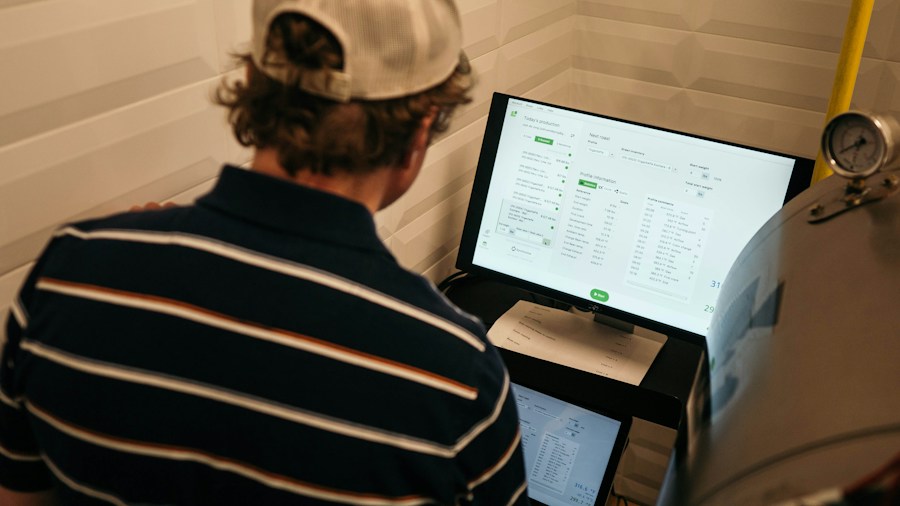
One of the most tangible benefits appears in customer support. Manufacturers report significant reductions in call volume and handling times when AI tools handle routine inquiries. Some systems can resolve customer questions entirely without human involvement, freeing trained technicians to tackle more complex issues. HVAC workers now prioritize stability and meaningful work, and AI that eliminates repetitive tasks aligns well with this industry shift.
For homeowners, these advances translate into several improvements. Contractors equipped with AI-powered diagnostics can identify problems remotely before arriving at your home. Maintenance scheduling becomes more intelligent as systems predict failures before they occur. As new HVAC graduates enter the workforce, they inherit tools that make them more productive and capable from day one.
Engineering and Product Development Gains
AI is also accelerating how manufacturers design and improve HVAC equipment. Engineers at all three major companies now use AI to handle repetitive scaffolding work that previously consumed hours of skilled time. This frees experienced engineers to focus on conceptual design, system optimization, and strategic product development. The result is faster innovation cycles and smarter connected products with capabilities like predictive diagnostics and real-time system optimization.
Manufacturers are training AI models on their own engineering data to identify design patterns and performance trends invisible to human analysis. This allows teams to evaluate tradeoffs faster and build next-generation equipment with greater confidence in its performance characteristics.
The Critical Role of Human Oversight
Despite AI’s capabilities, manufacturers acknowledge the technology is not foolproof. AI systems can experience hallucinations, where they generate false information, or drift, where performance gradually declines as data becomes outdated. These limitations mean human judgment remains essential.
All three manufacturers maintain strict governance frameworks. Carrier approaches AI deployment with formal testing and oversight processes, ensuring human expertise remains central to operations. Daikin established an AI Council and Center of Excellence to review all AI implementations. Trane emphasizes strong data security, governed data pipelines, and clear regulatory compliance measures.
Employees receive training in responsible AI use, and humans remain in the loop for critical decisions. While profitability drives HVAC business strategy, manufacturers recognize that AI must enhance rather than replace human judgment.
What to Expect Going Forward
Looking ahead, manufacturers predict AI will have the biggest impact in three areas. First, automation will help thermal management systems adapt in real time, improving comfort and energy performance. Second, AI tools will help technicians work more productively and deliver higher quality service. Third, facility management interfaces will become more intuitive, allowing facility managers to quickly identify problems and access relevant performance data.
The transformation is already underway. As these AI systems mature and manufacturers refine their approach, homeowners should expect more responsive service, more energy-efficient equipment, and fewer unexpected breakdowns.











Write Your Review
No reviews yet. Be the first to share your experience!