

A premium clockmaker has taken the IKEA effect, the behavioral economics principle that makes us value things we build ourselves, to an extreme new level. The result is a $14,840 desk clock that arrives as loose parts in a box rather than a finished product. This limited offering raises questions about what consumers are actually paying for and whether the hands-on assembly experience justifies the price tag.
What Is the Nostromo Clock
The Nostromo is a mechanical desk clock designed by Maximilian Maertens and crafted by French and Swiss horologist Maison Alcée. The clock features a distinctive beetle-like steel body with curved arcs, a peacock blue dial ring, and three tapered legs that allow the piece to sit stably on any desk surface. Unlike typical furniture or home decor, this clock requires ten hours of assembly using tweezers and specialized watchmaking tools before it even tells time.
Only 50 units will be manufactured, making this one of the most exclusive desk pieces on the market. The design celebrates 15 years of the M.A.D.Gallery and draws inspiration from science fiction aesthetic without directly copying any single reference. The finished product houses a 14-day power reserve and features a switchable hour chime once assembly is complete.
The Assembly Experience Matters Most
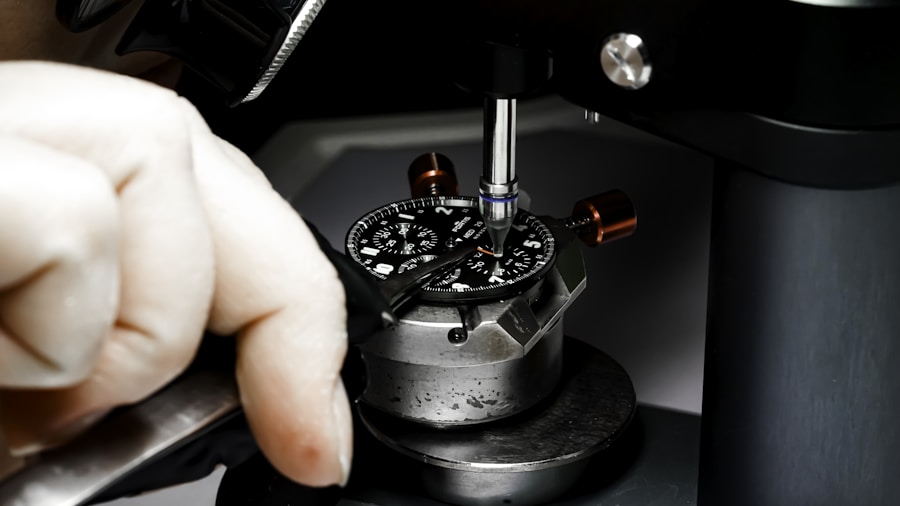
What makes the Nostromo fundamentally different from typical luxury home decor is that assembly is not optional, it is the product itself. The clock arrives in a wooden box containing 222 individual components, watchmaking tools, and a 250-page instruction manual. Everything except the regulating organ, which requires professional expertise, must be assembled by the buyer.
The kit includes seventeen tools, with several specifically adapted for someone who has never held tweezers before. Maison Alcée even commissioned custom screwdriver blades made from copper-beryllium alloy to reduce the risk of scratching the delicate components during assembly. Every design choice, from the visible slotted screws to the brushed steel finish, reflects consideration for an amateur builder. This pedagogical approach means the clock is essentially a horological education course disguised as a home object.
Why the Price Tag Exists
At CHF 12,000 or approximately $14,840 USD, the Nostromo commands a significant premium over the base Persée clock model, which costs around EUR 5,500. That difference in price reflects both the custom Maertens design work and the extremely limited 50-unit production cap. Buyers are not simply purchasing a mechanical clock; they are buying entry into an exclusive group and the privilege of spending ten hours building a precision instrument by hand.
The movement architecture comes from the Persée, Maison Alcée’s flagship clock introduced in 2022 and based on wristwatch mechanics scaled to desk size. Maertens rotated the entire movement on its side and angled the display upward for easier reading. The continuous dial ring was split into segments so the brass gear train becomes visible through the gaps. These changes might seem modest in engineering terms, but they completely transform how the clock looks and functions as a decorative object.
What Shoppers Should Know Before Buying

If you are drawn to the idea of assembling your own luxury item, understanding what you are committing to is essential. Ten hours represents a significant time investment, and the process demands focus and care. This is not a weekend hobby; it is a specialized craft activity that requires following detailed instructions with precision. The copper-beryllium screwdrivers included in the kit help prevent mistakes, but the responsibility for proper assembly rests entirely with the owner.
Availability is another critical factor. With only 50 units existing worldwide, obtaining one requires purchasing through M.A.D.Galleries in Geneva and Dubai or MB&F LABs locations. Delivery windows stretch from October through November, meaning immediate availability is impossible. If you appreciate the hands-on building experience that makes us treasure items we assemble ourselves, like IKEA furniture we customize, this clock represents the opposite end of the luxury spectrum.
The Nostromo also serves as a statement piece about craftsmanship and mechanical timekeeping. In an age of smartphones and digital displays, choosing a clock that requires ten hours of personal assembly signals a commitment to analog precision and artisanal production values. The beetle-like aesthetic, inspired by industrial and science fiction design, ensures the finished clock functions as both practical timepiece and conversation-starting sculpture.
The Bigger Picture for Design and Home Decor
This release reflects a broader trend in luxury home design: the celebration of process and personal involvement. Unlike mass-produced furniture, which prioritizes convenience and speed, the Nostromo asks buyers to slow down and engage deeply with an object. The approach aligns with the growing consumer interest in sustainability, craft knowledge, and meaningful possession rather than passive consumption.
For shoppers considering this purchase, the decision ultimately comes down to whether the experience of assembling a precision mechanical clock is worth the investment. The Nostromo offers something that finished luxury decor cannot: a personal story of creation, specialized knowledge gained during assembly, and a direct connection between your hands and a functioning mechanical instrument. Whether that justifies $14,840 depends entirely on how you value your time and what brings meaning to your home environment.












Write Your Review
No reviews yet. Be the first to share your experience!