

3D Printer Safety in Home Offices: What You Need to Know Before Buying
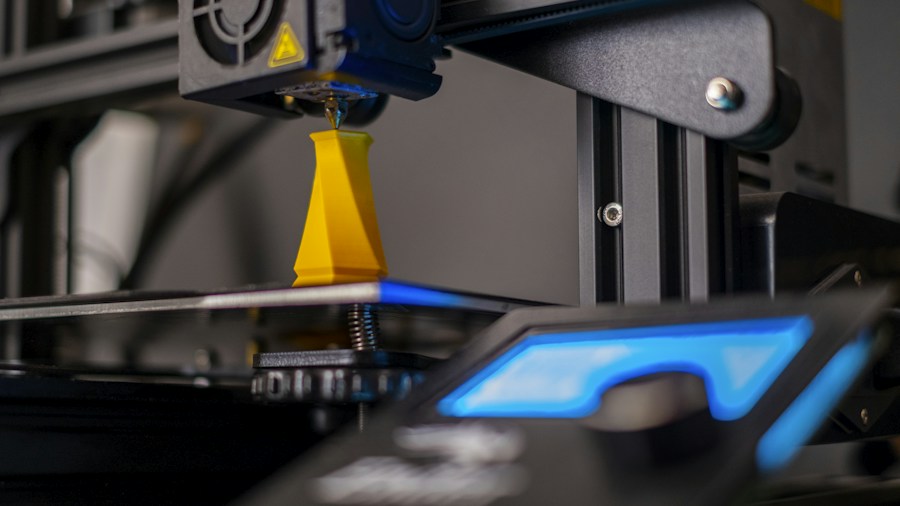
If you have been considering adding a 3D printer to your home office setup, a critical conversation around air quality and health safety deserves your attention before you make a purchase. Recent research into 3D printing emissions has revealed that even commonly used materials pose respiratory risks when used in poorly ventilated spaces like bedrooms and desk corners.
What 3D Printers Actually Release Into Your Air
The manufacturing process of 3D printing, whether using standard filament or liquid resin, generates airborne particles and gases that can accumulate in your breathing space. PLA filament, often marketed as the safer alternative to other materials, still emits ultrafine particles and volatile organic compounds (VOCs) when heated. According to the Environmental Protection Agency, these ultrafine particles can penetrate deep into your respiratory system, and some VOCs carry potential health risks with repeated exposure.
Research comparing 17 different commercial filaments found that ABS material released significantly more particles than PLA, though the difference between brands and nozzle temperatures created variation in results. Laboratory studies exposing human airway cells to 3D printer emissions documented cellular changes associated with inflammation and stress. However, scientists have not yet established what long-term residential exposure means for your health or determined a safe exposure threshold for bedroom or office use.
Resin printers introduce additional concerns. The National Institute for Occupational Safety and Health warns that uncured resin can trigger skin reactions and asthma symptoms, with additional risks during the washing and curing phases, particularly when solvents are involved.
Why Your Desk Corner Is Not a Safe Printing Location
Many people assume that simply placing a 3D printer on a desk or nightstand is feasible because the machine is compact. The reality is more complex. Print jobs often run for hours, meaning continuous exposure to emissions throughout the operation. Sleeping in a bedroom with an operating printer overnight, or working at a desk adjacent to one, exposes you to concentrated air quality degradation without proper mitigation.
Distance alone does not protect you. While keeping a printer away from your primary work area reduces the total time spent in close proximity, it cannot replace mechanical ventilation. An open window might draw in fresh air, but it does not reliably capture and remove the particles and gases being emitted by the machine.
The Right Setup for Safe Home Office Printing
A dedicated workshop or separate room with ventilation that exhausts to the outdoors is the gold standard for 3D printing. A garage can work if it has proper ventilation and stable temperature and humidity conditions that won’t damage your prints. For home office users without a separate room, an enclosure with exhaust ducting directed outside offers the best compromise. This approach captures emissions closer to their source rather than allowing them to disperse throughout your workspace.
HEPA filters and activated carbon filters have their place in a printing setup, but they are not silver bullets. HEPA filters catch particles effectively, and activated carbon absorbs some VOCs if there is sufficient volume. Neither can transform a poorly ventilated room into a safe printing environment, and both require ongoing maintenance and replacement costs. Mobile office solutions designed for remote work increasingly address health and air quality as core features, reflecting growing awareness of these concerns.
Practical Alternatives and Safety Considerations
If your home lacks suitable ventilation options, local 3D printing services may be a smarter financial and health decision than purchasing your own equipment. Home office upgrades that support your wellbeing should always include air quality management as a priority factor.
Safety planning extends beyond emissions as well. NIOSH recommends keeping printers away from flammable materials and installing fire detection in any printing area. The heating elements and operational demands of 3D printers create legitimate fire risks that warrant attention during room planning.
Making Your Buying Decision
Before investing in a 3D printer for your home office, honestly assess your available space and ventilation capacity. PLA may be safer than ABS, but it is not risk-free in a confined, unventilated area. The total cost of safe operation includes not just the printer itself, but also enclosures, ducting systems, filter replacements, and potentially dedicated room modifications. Data on workspace design failures increasingly highlights air quality and respiratory health as critical elements of home office planning.
For occasional printing needs, outsourcing the work makes financial and health sense. For regular printing, plan to invest in proper ventilation infrastructure alongside your printer purchase. Your respiratory health is not an afterthought to your hobby or business workflow, it is a foundational requirement for any home office setup involving equipment that generates airborne emissions.












Write Your Review
No reviews yet. Be the first to share your experience!