

A New Approach to Portable Seating
The furniture industry has long relied on invisible hardware to keep pieces together. Screws, bolts, dowels, and glues do the structural work that prevents chairs, tables, and stools from falling apart. A newly designed wooden stool from a Japan-Sweden craft exchange demonstrates that there is another way: rope tension alone.
Created through a collaborative residency between craftspeople in Tottori, Japan, and Gothenburg, Sweden, the Rope Stool eliminates all conventional fasteners. Instead, it uses a single length of rope to hold flat cedar boards into a rigid, functional seat. When you loosen the rope, the stool disassembles into a flat stack of boards. This innovative approach to furniture construction has real implications for how shoppers think about portability, durability, and design.
How the Rope Stool Works
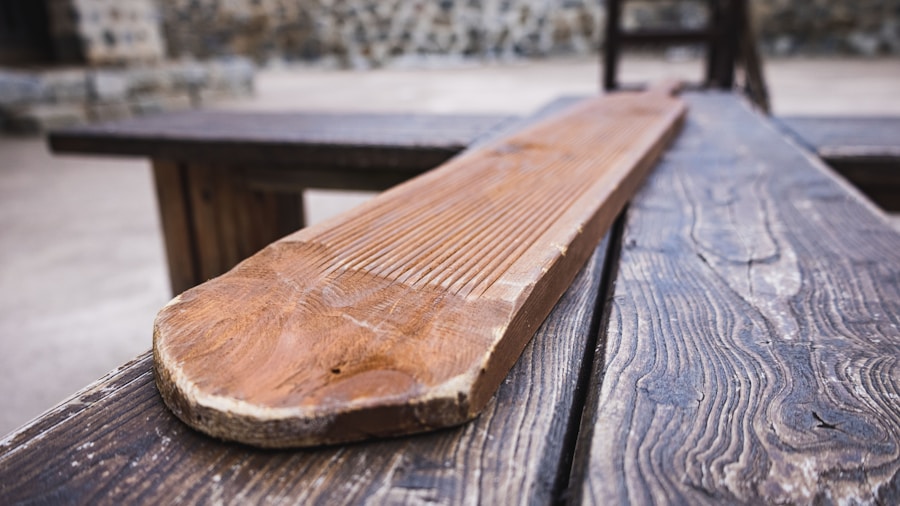
The stool was born from an intentionally strict design brief: create a piece of furniture from a single, repeatable wooden element. The result is a seat made entirely from identical flat boards of Japanese cedar, also known as sugi. No custom-cut components. No specialized hardware. No adhesives. The rope creates the rigidity needed to support a person’s weight, and loosening it releases the structure back into its component parts.
Japanese cedar was chosen deliberately. This traditional wood is prized for its light weight, straight grain, and long-lasting properties. The boards can be cut uniformly enough to be completely interchangeable, which meets the core requirement of the design challenge. Every board functions identically, and the rope is what transforms a pile of identical pieces into something you can actually sit on.
What This Means for Shoppers
This design approach offers several practical advantages for consumers. Portability is perhaps the most obvious benefit. A seat that breaks down into a flat bundle of boards and rope is dramatically easier to transport than conventional stools or chairs. Whether you need seating for a market stall, outdoor event, workshop, or camping trip, the Rope Stool can go where traditional furniture cannot. You can carry it, store it flat in a closet or vehicle, and set it up in seconds.
Beyond portability, the stool demonstrates a philosophical approach to furniture construction that appeals to consumers interested in transparency and simplicity. The structure is completely visible. There are no hidden mechanisms or mysterious joints. The logic of how it stays together is immediately readable. Pull the rope tight, and the stool assembles. Loosen it, and it comes apart. This honesty in design is rare in mass-produced furniture, where complexity and concealed hardware are standard.
The durability factor is also worth considering. Japanese cedar is a proven material with centuries of use in traditional Japanese construction. Its straight grain and light weight make it resistant to warping and splitting. When a rope eventually wears out after years of use, it can be replaced easily, without needing to disassemble the entire piece or call in a specialist. Compare this to a conventional stool where one broken screw or dowel might require professional repair.
A Design Lesson with Practical Applications

The Rope Stool emerged from a genuine creative residency, not simply a cultural exchange or marketing showcase. Six Swedish designers spent three weeks collaborating with local Japanese craftspeople, supported by funding from both governments and organized by a retailer committed to promoting artisan work. That intensive, authentic collaboration resulted in a design that balances conceptual clarity with real-world functionality.
What makes this noteworthy for furniture shoppers is that it challenges conventional thinking about what holds furniture together. As you evaluate pieces for your home or workspace, consider whether you are paying for complexity that adds cost but not value. Many furniture placement solutions require permanent assembly and specialized hardware. The Rope Stool shows that effective seating can be radically simple.
For consumers interested in sustainable purchasing, this design has merit too. The minimal materials and transparent construction mean there is less to wear out or fail. The single repeatable element approach reduces waste in manufacturing. And the ability to pack it flat and transport it means a single stool can serve multiple purposes across different locations, rather than requiring several pieces.
The $77 price point also signals that this approach is not just a boutique luxury item. As more furniture designers and manufacturers recognize the value of simplicity and transparency in construction, shoppers may see more options that move away from hidden hardware and toward visible, understandable structural logic. Check out current furniture sales and promotions to find portable and versatile seating solutions that fit your needs.
The Takeaway
The Rope Stool is more than a design curiosity. It represents a shift in thinking about how furniture can be built, transported, and maintained. For shoppers tired of heavy, complicated pieces that are difficult to move or repair, it offers a compelling alternative rooted in both traditional craftsmanship and contemporary practicality.







Write Your Review
No reviews yet. Be the first to share your experience!