

Homeowner Breaks the Conventional Wisdom on Small Kitchen Design
For decades, interior design advice has cautioned against using dark colors in compact spaces. The logic seems sound: dark tones supposedly shrink a room, making tight quarters feel even more claustrophobic. But one homeowner’s recent kitchen transformation proves this conventional wisdom may not tell the whole story. By choosing to paint her galley-style kitchen cabinets in a bold blue-black shade, Mara Greenwald discovered that the opposite effect occurred. Her narrow kitchen actually appears more spacious, and the dramatic upgrade required far less investment than a full renovation.
The Journey From Light Gray to Deep Blue-Black
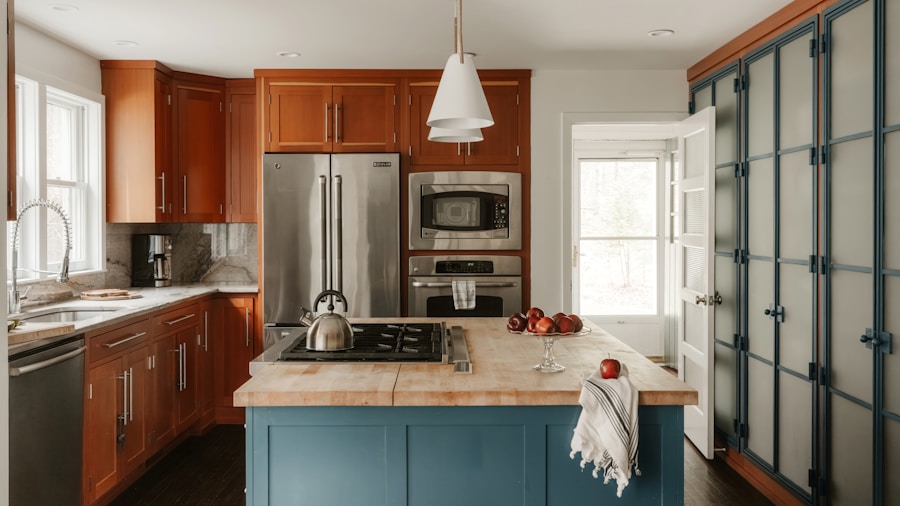
Greenwald’s kitchen featured wood cabinetry with a dated 2000s aesthetic. While the original wood tone wasn’t objectively poor, it clashed with the bolder vision she wanted to create. Her first attempt at change involved painting the cabinets in light gray, hoping the softer neutral would modernize the space. The result fell flat. The light gray failed to deliver the dramatic transformation she was seeking, leaving the kitchen feeling uninspired and dated.
Instead of abandoning her vision, Greenwald decided to embrace a much bolder approach. She selected a deep blue-black shade (Farrow & Ball’s “Railings”) and brought in professional painters to apply it. This decisive shift proved to be the turning point for her entire kitchen aesthetic.
How Dark Cabinets Created Visual Expansion
The results challenged everything conventional design wisdom suggests about dark paint in small kitchens. The blue-black cabinets create striking contrast against Greenwald’s white walls, which actually amplifies the perception of height and space. The tall ceilings become more prominent, and the overall kitchen feels noticeably larger rather than cramped. The defined color separation between the deep cabinets and bright walls creates a visual anchor that paradoxically makes the galley layout feel more intentional and spacious.
The kitchen’s cohesive design strategy extends beyond cabinet color alone. Greenwald paired the dark cabinetry with black countertops and budget-friendly hardware at approximately ten dollars per pull. This unified dark aesthetic gives the room a distinct identity, almost like a separate room rather than part of an open floor plan. That visual separation between the kitchen and the rest of the home may contribute to the expanded sense of scale.
The Power of Paint Over Full Renovation
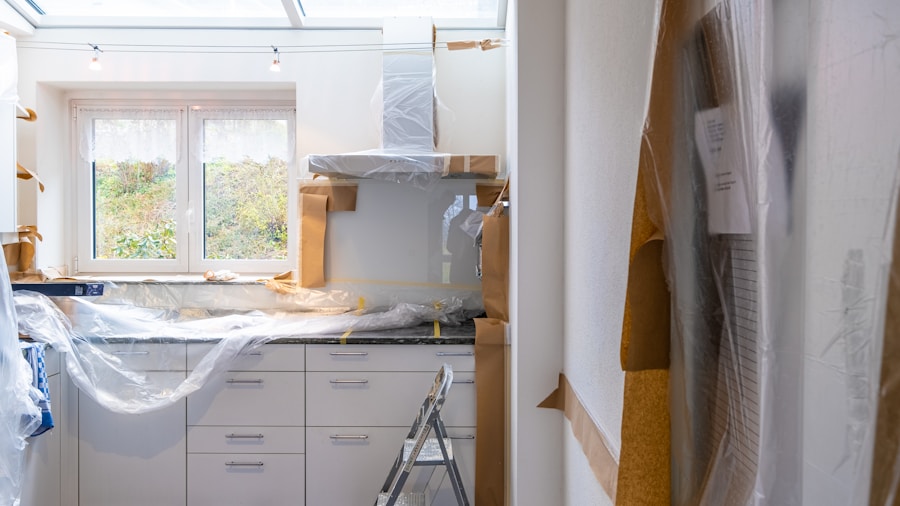
What makes Greenwald’s project particularly instructive for homeowners is its cost efficiency. You don’t need to demolish your kitchen or undertake an expensive, months-long renovation to achieve dramatic results. Paint represents one of the most accessible and affordable ways to completely reinvent a space. Professional application ensures quality results and longevity, and the transformation can be accomplished in days rather than weeks or months.
This approach offers meaningful lessons for anyone feeling stuck with an outdated kitchen. Whether your cabinets carry remnants of earlier design trends or simply don’t align with your current aesthetic preferences, a fresh paint application can serve as the bridge to your desired style. Like other strategic design investments, such as selecting impactful wall art, the right finishing touches can completely transform how a space feels and functions.
What This Means for Your Paint Color Decisions
Greenwald’s kitchen demonstrates that design rules exist to be thoughtfully questioned. While lighting conditions, existing finishes, and room proportions certainly matter, no single rule applies uniformly to every space. Her willingness to challenge the “never dark colors in small rooms” maxim led to a more successful result than playing it safe with light gray.
The lesson for shoppers considering their own kitchen updates is twofold. First, test your paint color assumptions before committing to major expenses. A professional painter can help you understand how a color will perform in your specific lighting and against your particular walls. Second, understand that dramatic design changes don’t require massive budgets. Paint, hardware, and countertop materials deliver outsized impact when coordinated thoughtfully.
If you’re working with a compact kitchen and feeling uninspired by neutral tones, consider the possibility that a unexpected paint choice might be precisely what your space needs. Just as homeowners are increasingly exploring creative ways to expand outdoor living areas, interior design is moving toward bolder, more personalized choices that challenge traditional constraints. Your kitchen doesn’t need to follow outdated design rules to feel larger, more modern, and more authentically yours.










Write Your Review
No reviews yet. Be the first to share your experience!